
 During
a
dental
implant,
when
the
bone
of
a
patient
is
not
strong
enough
to
handle
the
implant,
a
surgical
procedure
that
is
called
bone
graft
is
a
must.
A
bone
graft
can
create
a
more
solid
base
for
the
implants
to
settle
in.
With
bone
grafting,
a
piece
of
bone
from
the
patient’s
own
body
(mouth)
is
taken
OR
an
artificial,
synthetic,
natural
substitute
is
used
to
strengthen
the
place
where
the
dental
implants
will
be.
During
a
dental
implant,
when
the
bone
of
a
patient
is
not
strong
enough
to
handle
the
implant,
a
surgical
procedure
that
is
called
bone
graft
is
a
must.
A
bone
graft
can
create
a
more
solid
base
for
the
implants
to
settle
in.
With
bone
grafting,
a
piece
of
bone
from
the
patient’s
own
body
(mouth)
is
taken
OR
an
artificial,
synthetic,
natural
substitute
is
used
to
strengthen
the
place
where
the
dental
implants
will
be.
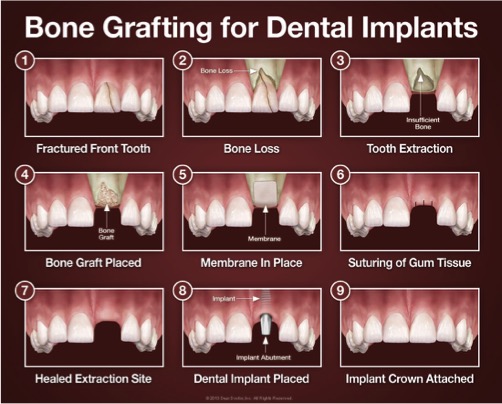
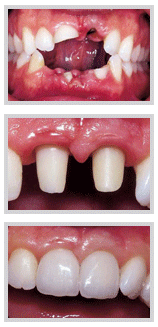
The
picture
below
shows
a
brief
explanation
of
the
steps
that
a
bone
graft
patient
goes
through.
After the sixth step, the patient waits for three months minimum (depending on the case) for the healing of the gum where the bone graft surgery took place.
Once the gum has healed completely, the implant is fixated in its proper place.After the fixation of the implant and before placing the abutment, the patient should wait minimum one month to see if the body has accepted or rejected the implant.
If it is accepted, the procedure continues as planned and the abutment is set on the implant followed by the crown, as seen in the picture above in the last two steps. And if the implant is rejected, the 8th step is repeated and again there will be waiting to see if the implant is accepted or rejected.
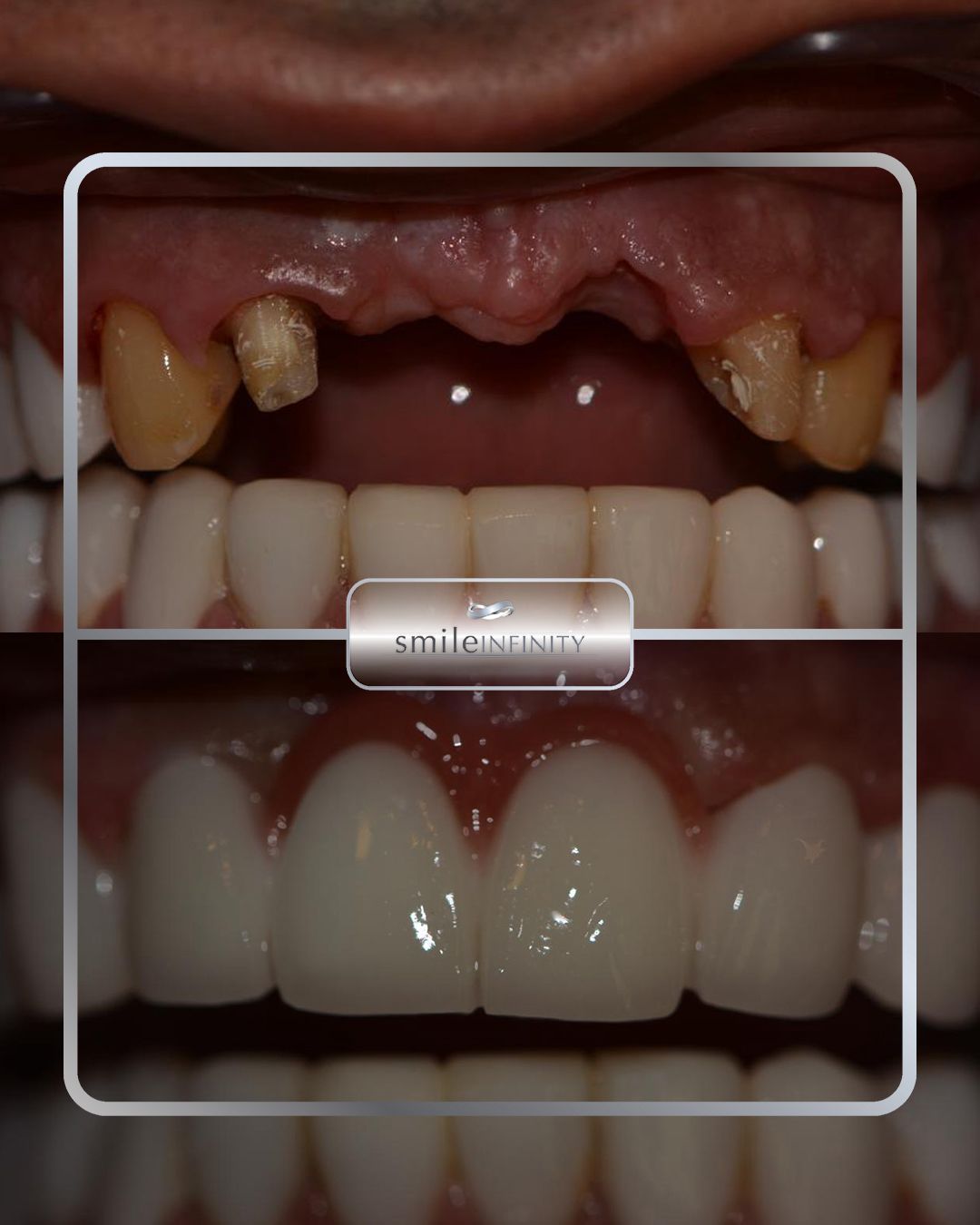
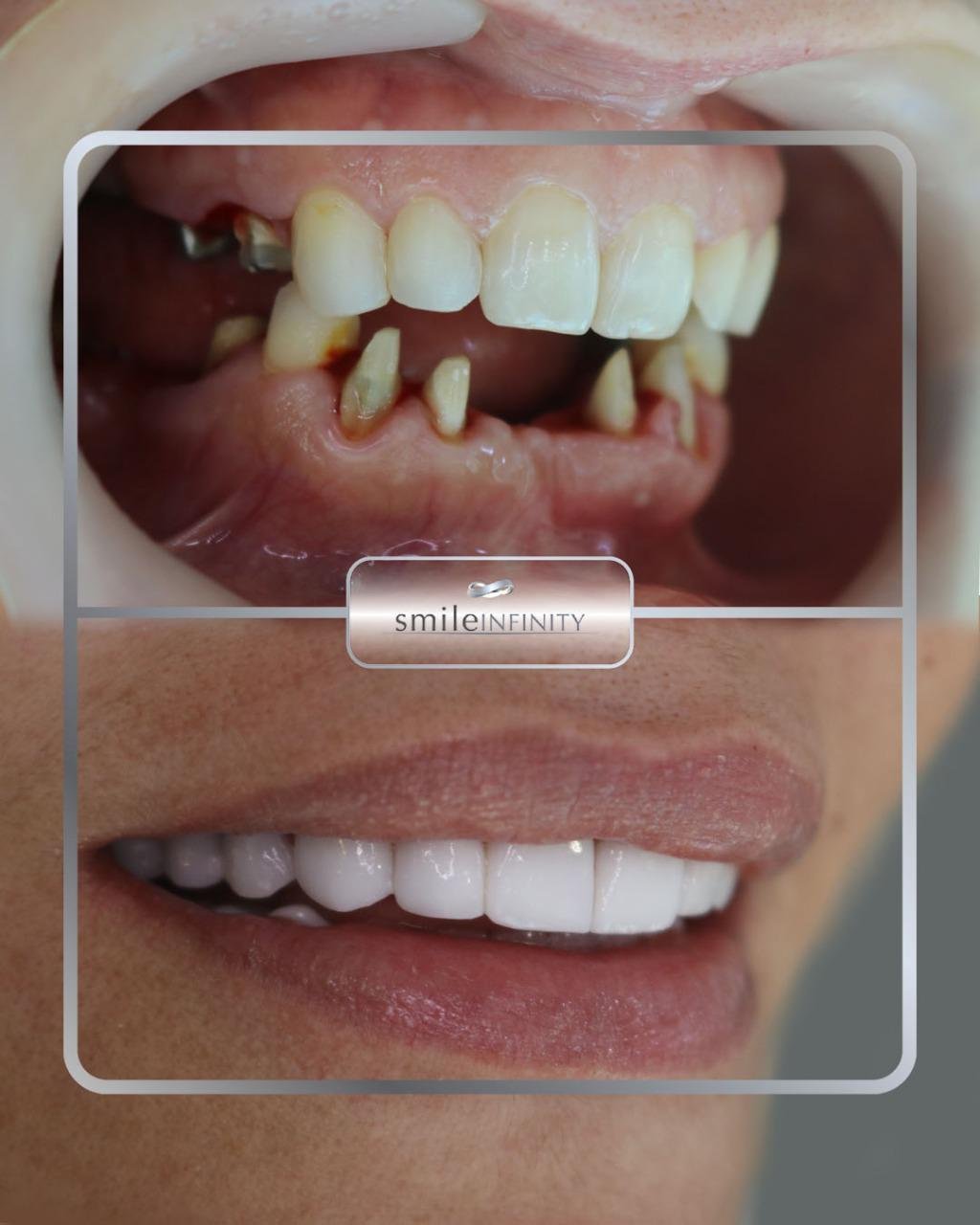
Bone Grafting, the Right Way
An implant needs bone to hold it. When the ridge is too thin or too short — after an extraction, gum disease or years without a tooth — we rebuild it before or during implant placement. We work with autograft (your own bone, the gold standard for healing), xenograft, and synthetic substitutes such as Easy-Graft crystals from Degradable Solutions, Switzerland, choosing the material to match the defect. The graft acts as a scaffold; over three to six months your own bone grows through it and gradually replaces it.
Piezosurgery & Guided Bone Regeneration
Modern grafting is gentle. We harvest and shape bone with piezosurgery — ultrasonic tips that cut mineralised bone precisely while sparing the sinus membrane, nerves and soft tissue. The graft is then protected under a barrier membrane in a technique called Guided Bone Regeneration (GBR), which keeps fast-growing gum tissue out so slow-growing bone can fill the space undisturbed. For the upper back jaw we perform sinus lifts to add height beneath the sinus floor, often through a minimally invasive, membrane-safe approach.
From Graft to Implant to Smile
Bone grafting is rarely the goal — it is the foundation. Once the ridge is solid we place German-engineered implants, often flapless with an Erbium laser, restore them on CAD/CAM in our Smile Infinity laboratory, and finish the case with veneers, crowns and lip aesthetics for a complete Smile Lift. Bone, implant, tooth and face — planned and rebuilt as one.
Every case is led by Dr. Habib Zarifeh — International Cosmetic Dentist and Dental Implants Surgeon, Head of Oral Surgery at CMC Hospital Beirut (affiliated with Johns Hopkins International), MSc in Laser Dentistry, RWTH Aachen, Germany, and founder of Smile Infinity Medical Centres across 12 countries.
It’s not a smile. It’s a signature.
At Ferrari Dental Clinic we target on auograft, xenograft and especially Easy Graft cristal synthetic bone substitute from “Degradable Solution” Switzerland.
For more and detailed information please check the following Link: